Three IRFD grants for political science researchers
Peter Bjerre Mortensen, Svend-Erik Skaaning and Viki Lyngby Hvid each receive a grant of just over DKK 3 million from the Independent Research Fund Denmark.
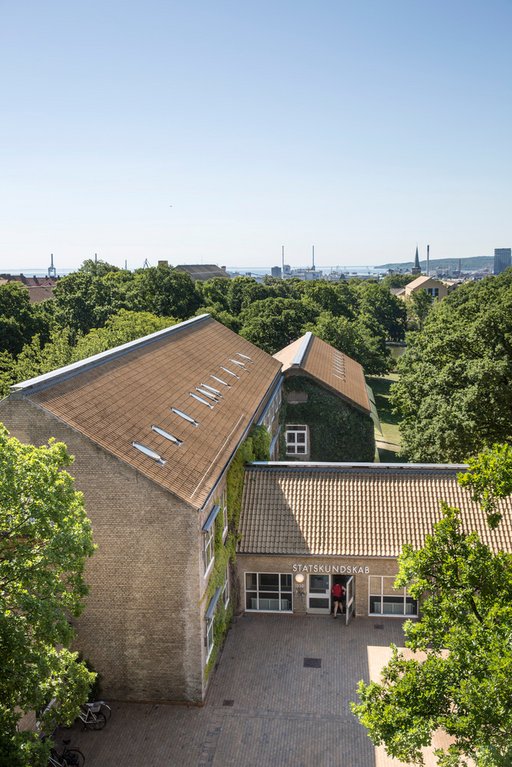
Three grants from Independent Research Fund Denmark pave the way for new research at the Department of Political Science at Aarhus BSS, Aarhus University. Two of the projects address democracy research from different angles: How do municipalities respond to the national demands placed on them? Do citizens believe that democracy is costly in important areas such as economic growth, security or crisis management? The third project deals with paternalistic politics, which on the one hand can promote equality in society, but on the other hand can also be discriminatory.
The three grants are all IRFD Research Project 1 grants. Together, they provide DKK 9,465,195 to the Department of Political Science. Read more below.
DOUBLEDEM by Peter Bjerre Mortensen
DOUBLEDEM by Peter Bjerre Mortensen
Professor Peter Bjerre Mortensen receives DKK 3,167,848 for his project DOUBLEDEM, short for Local Policy Customization in a Double Democracy.
Project description:
Most democratic countries are characterized by a double democracy where representatives at the subnational level of government are different from elected representatives at the central level of government. By design, a double democracy implies a legitimate room for subnational customization of national policies.
DOUBLEDEM is the first project to systematically investigate how large this room is and how local politics shapes the local filling of this room. In researching this question, the project offers three key contributions: 1) It develops a new theory on local policy customization of national policy building on the concept of customization from the EU literature; 2) it develops a new measure of national policy to systematically map – over time and across policy areas – the demands that national regulation imposes on local governments; and 3) it develops a new measure of local policy to empirically examine local policy customization across subnational units of governments and across policy areas.
DEMTRAP by Svend-Erik Skaaning
DEMTRAP by Svend-Erik Skaaning
Professor Svend-Erik Skaaning receives DKK 3,167,689 for his project DEMTRAP, short for Democratic Tradeoff Perceptions. Assistant professor Kristian Frederiksen will also be part of the project.
Project description:
The DEMTRAP project explores how citizens perceive possible tradeoffs between democratic rights and effective governance. Although democracies generally perform as well as or better than autocracies, many people believe democracy can be too slow or divided to solve major problems. Such views may erode support for democratic norms and open the door to authoritarian leaders.
Through an innovative theoretical framework and comparative experimental surveys, DEMTRAP investigates when and why citizens come to see democracy as costly, how crises and polarization shape these beliefs, and what this means for democratic resilience. The findings will deepen understanding of public commitment to democracy and inform strategies to strengthen it.
Paternalism and Discrimination by Viki Lyngby Hvid
Paternalism and Discrimination by Viki Lyngby Hvid
Associate Professor Viki Lyngby Hvid from Centre for the Experimental-Philosophical Study of Discrimination CEPDISC receives DKK 3,129,658 for her project” Paternalism and Discrimination: Moral Dilemmas in Combatting Group Inequalities”. A postdoc will also be part of the project.
Project description:
Acts and policies that interfere with people, without their consent, and to promote their interests or wellbeing are paternalistic. Examples include smoking policies or the policy of earmarked paternity leave. While paternalism has the potential to significantly benefit people, it is also criticized, for example, for disrespecting people’s autonomy. An important but under-examined aspect of paternalistic policies is that they often target disadvantaged groups or affect groups differently. While such efforts potentially promote equality, including labour market and health equality, they at the same time raise concerns about discrimination. The project illuminates the challenges of combatting inequalities between different groups in society while catering to the morally significant concerns of avoiding wrongful paternalism and discrimination. By combining analytical political philosophy and experimental empirical methods, the project investigates how the moral wrongness of policies that are both paternalistic and discriminatory can potentially be mitigated.